
Preparing Your Child for Back to School With Asthma: What Parents Need to Know
Back-to-school season can be stressful for any parent. But when your child has asthma, that stress can double. New routines, new environments, and exposure to germs and allergens can all trigger flare-ups. The good news? With a little planning, you can help your child breathe easier all year long.
Grab a copy of our free printable back to school checklist at the end of this post.
Here’s what to focus on before that first school bell rings:

1. Book an Asthma Check-Up Now

Schedule an appointment with your child’s healthcare provider before school starts. Make sure their asthma action plan is current, review symptoms and ensure prescriptions are adequate and up to date. If you do not currently have an Asthma Action plan, ask your healthcare provider to create one for your child. Action plans are an extremely helpful tool to recognize when asthma symptoms are controlled or not. Your healthcare provider will provide you with steps you can take to manage if your child’s symptoms start to worsen. More on Asthma Action Plans below.
2. Update the Asthma Action Plan
Every child with asthma should have a written asthma action plan. This plan should outline:
Controller medications
Reliever Medications
Triggers
Asthma control zones categorized into Green(Controlled), Yellow( Warning), Red( Seek medical care ASAP)
Signs and symptoms in each zone
What to do in case of an asthma attack
Emergency contacts
Doctors name and contact information
If your child does not have an action plan for his or her asthma, discuss it at your next appointment with your healthcare provider and request for one. Share a copy with the school nurse, teachers, coaches, and anyone else who might supervise your child during the day. Provide your child with a copy of their action plan to store in their Asthma Kit.
Click here to checkout the Canadian Lung Associations Pediatric Asthma Action plan. Print out a copy to bring with you to your next appointment!

Asthma Action Plan Tip
Thick of your action plan like a traffic light. Green is good to go. Yellow means to slow down and prepare to stop. Red means to stop and seek care.
3. Stock the School With Medication
Provide the school with a clearly labeled, unexpired rescue inhaler—plus a spacer if your child uses one. Depending on your child’s age and local regulations, they may be allowed to carry their own inhaler. Talk to the school about their policy and complete any necessary consent forms.
Canadian Policies for Emergency Medication
Ontario (provincial law):
Under Ryan’s Law (2015), principals must allow a student to carry their asthma medication if the parent/guardian agrees (often with clinician sign-off). Boards must also have asthma policies and staff training. Ontario+1allergicliving.com
Alberta :
Major school boards explicitly permit self-carry when a student is developmentally capable and the proper forms are on file.
• Edmonton Public Schools (EPSB): “If the student is developmentally capable, Epi-Pens or inhalers shall be carried by the student on their person in a safe, readily available pouch.” Edmonton Public Schools
• Calgary Board of Education (CBE): Allows self-administration; if self-carrying, some limits (e.g., typically a single day’s dosage) and documentation apply. cbe.ab.ca+1
• Other AB divisions publish similar procedures (e.g., Lethbridge School Division). lethsd.ab.ca
Other provinces/territories:
Most rely on board-level policies like Alberta’s model (permission + care plan + training). Ontario is the notable province with explicit legislation specific to asthma. Asthma Canada
4. Talk to Teachers and Staff
Don’t assume everyone knows what asthma looks like. Take time to explain your child’s triggers, symptoms, and what an asthma flare-up might look like for them specifically. Also, discuss any accommodations your child may need—like avoiding strenuous outdoor activities on high-pollen or poor air quality days. Have a conversation about what your school’s policy is for outdoor activity exemptions and poor air quality.
5. Control Environmental Triggers
Ask about your child’s classroom environment. Common triggers include:
Dust and mold
Strong odors (cleaning supplies, perfumes)
Pet dander (if animals are used in classrooms)
Cold air in gyms or playgrounds
If your child is sensitive to any of these, work with the school to find solutions.
6. Build Your Child’s Confidence
Teach your child how to recognize early asthma symptoms and when to speak up. Practice how to calmly tell an adult they need their inhaler or need to take a break. This empowers your child to take control when you’re not around.
Reviewing medications and techniques on how to properly take their asthma puffers is a great idea. This will help your child feel more confident on how to manage if their breathing changes at school.
7. Plan for the Unexpected
Make sure the school knows what to do in case of a severe asthma attack, including when to call 911. You can’t always prevent flare-ups, but you can ensure fast, appropriate action. Some schools may have a policy or guideline they will follow to notify parents if a child needs their emergency medications, review this plan if needed.
Final Word:
The school year brings plenty of changes—but your child’s asthma doesn’t have to get in the way. With clear communication, proper planning, and the right tools in place, your child can thrive in the classroom, on the playground, and everywhere in between.
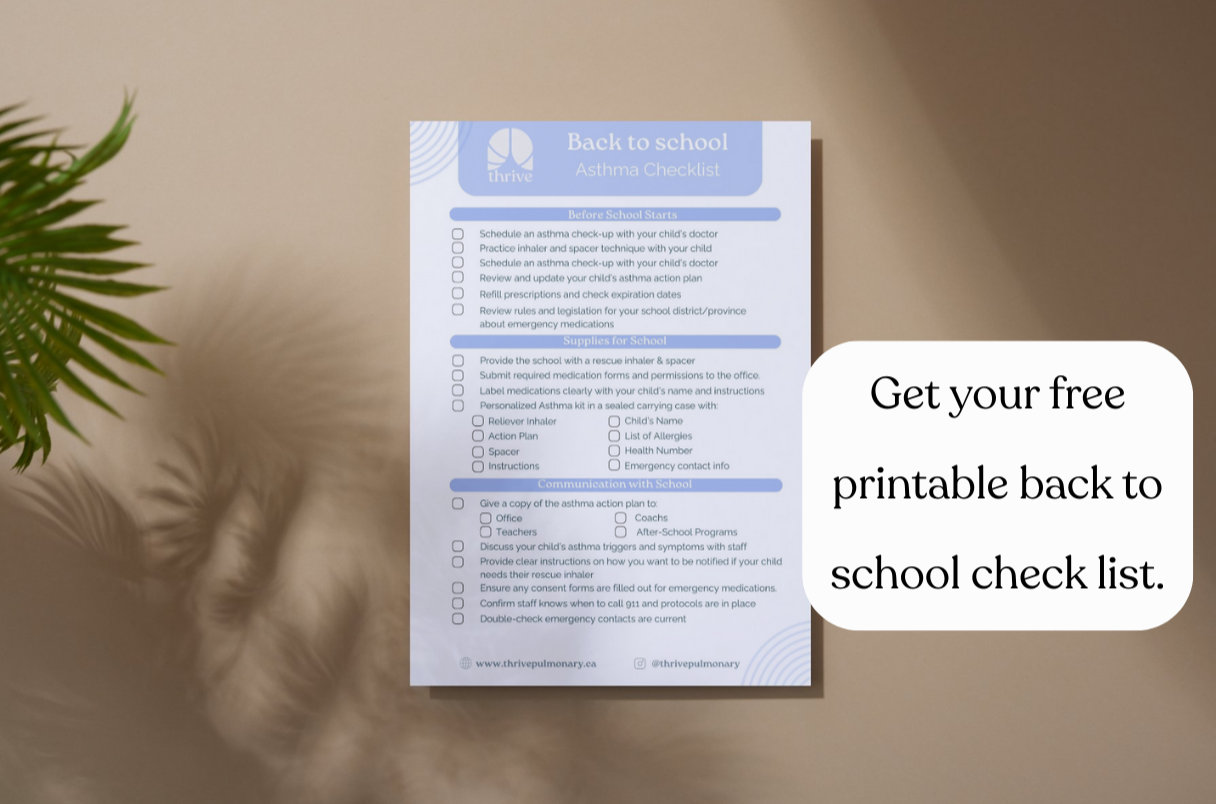
Heading back to class? Snag the free School Asthma Kit Checklist so teachers and caregivers have exactly what they need—no last-minute scramble.
Sign up to our newsletter and get your free printable Back to school Asthma checklist. Once you confirm your subscription in your email inbox you will receive your free printable.
