
Asthma vs. COPD: What is the difference between them ?
Confused about asthma vs. COPD? Learn the main differences, symptoms, treatments, and how to manage each condition in a simple, easy-to-understand way.Asthma vs COPD: What’s the Difference?

Why This Matters
Breathing is something most of us don’t even think about—until it gets hard. If you or someone you love has struggled with coughing, wheezing, or shortness of breath, you’ve probably heard the terms asthma and COPD. They sound similar and both affect the lungs, but they’re actually different conditions.
In this article, we’ll break down asthma vs. COPD in simple terms so you can understand what sets them apart, how they’re treated, and what you can do to breathe easier.
What is Asthma?
Think of asthma as a sensitive airway problem. The tubes that carry air in and out of your lungs sometimes get inflamed, swollen, and tight, making it hard to breathe. The good news? With the right treatment, asthma symptoms usually come and go—they don’t stick around forever.

Common Triggers of Asthma
Allergies (dust, pollen, pets, mold)
Cold air or sudden weather changes
Exercise (especially in cold weather)
Stress or strong emotions
Air pollution and smoke
Typical Symptoms
Wheezing (a whistling sound when breathing)
Shortness of breath
Tightness in the chest
A cough that’s worse at night or early morning
What is COPD?
COPD stands for chronic obstructive pulmonary disease. That’s a mouthful, but in plain English, it means your lungs are damaged over time and breathing slowly becomes more difficult. Unlike asthma, COPD symptoms don’t fully go away. They usually get worse with age if not treated.
Most people with COPD have one or both of these:
Chronic Bronchitis → constant cough with lots of mucus
Emphysema → damaged air sacs in the lungs, making it harder to get oxygen
Typical Symptoms of COPD
A “smoker’s cough” that won’t go away
Wheezing and shortness of breath, even at rest
Fatigue and low energy
Frequent chest infections
Asthma vs. COPD: The Big Differences
Here’s a simple side-by-side look:
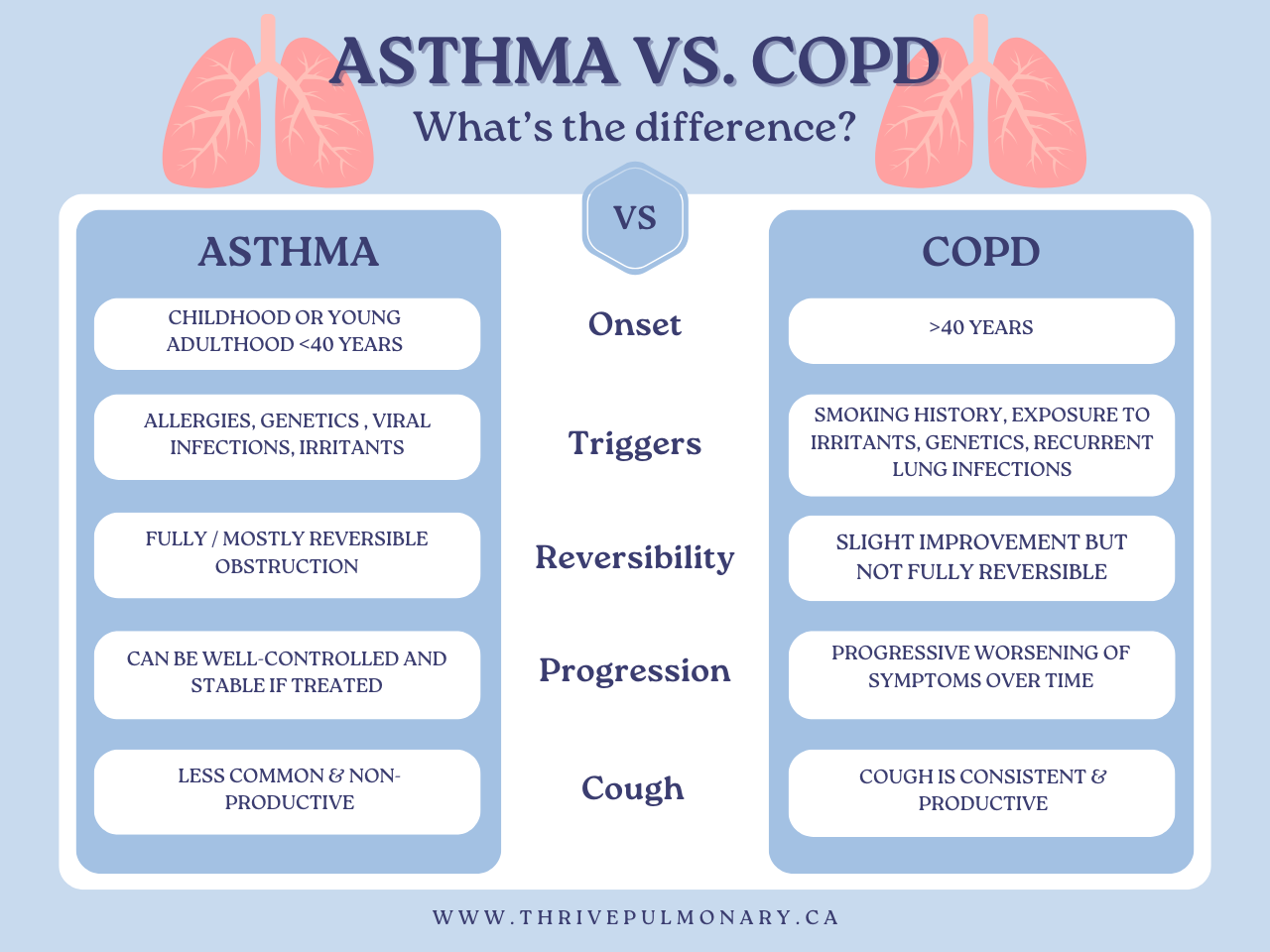
Side by side comparison Asthma VS. COPD some of the key differences between the two.
Can You Have Both?
Yes! Some people have something called asthma-COPD overlap (ACOS). It’s exactly what it sounds like—you have features of both conditions. This makes treatment a bit more complicated, but doctors usually use a mix of asthma and COPD medicines to help control symptoms.
How Are They Treated?
The goal with both asthma and COPD is the same: make breathing easier and prevent flare-ups.
Asthma Treatment
Inhaled bronchodilators that open up your airways
Steroids to calm inflammation
Avoiding triggers like smoke, dust, and strong scents
COPD Treatment
Long-acting inhalers for everyday breathing support
Oxygen therapy in severe cases
Pulmonary rehab programs (exercise + education for lung health)
Most importantly: quit smoking if you smoke!
Lifestyle Tips for Both Asthma and COPD
Stay active. Gentle and intentional exercise helps the lungs and strengthens your body
Get vaccinated (flu and pneumonia shots protect against lung infections).
Eat a healthy diet to keep your immune system strong.
Learn your personal triggers and try to avoid them.
When Should You See a Doctor?
Don’t ignore your lungs. Call a doctor if you:
Have shortness of breath that keeps getting worse
Struggle to sleep because of coughing or wheezing
Feel chest tightness often
Have a cough that lingers for more than a month
FAQs: Asthma vs. COPD
1. Can asthma turn into COPD?
Not exactly, but if someone with asthma smokes for years, they may develop COPD on top of it.
2. Which one is more dangerous?
Both can be serious. The difference is asthma is usually treatable, while COPD tends to get worse over time.
3. Can I have both?
Yes, that’s asthma-COPD overlap. Doctors treat it with a combination of medications.
4. How are they diagnosed?
With a simple breathing test called spirometry and a review of your symptoms.
Final Thoughts
Asthma and COPD both affect your lungs, but they’re not the same. Think of asthma as a sensitive but treatable condition, while COPD is more of a long-term damage issue. If you notice breathing problems, don’t brush them off. Early diagnosis and treatment can make a huge difference.
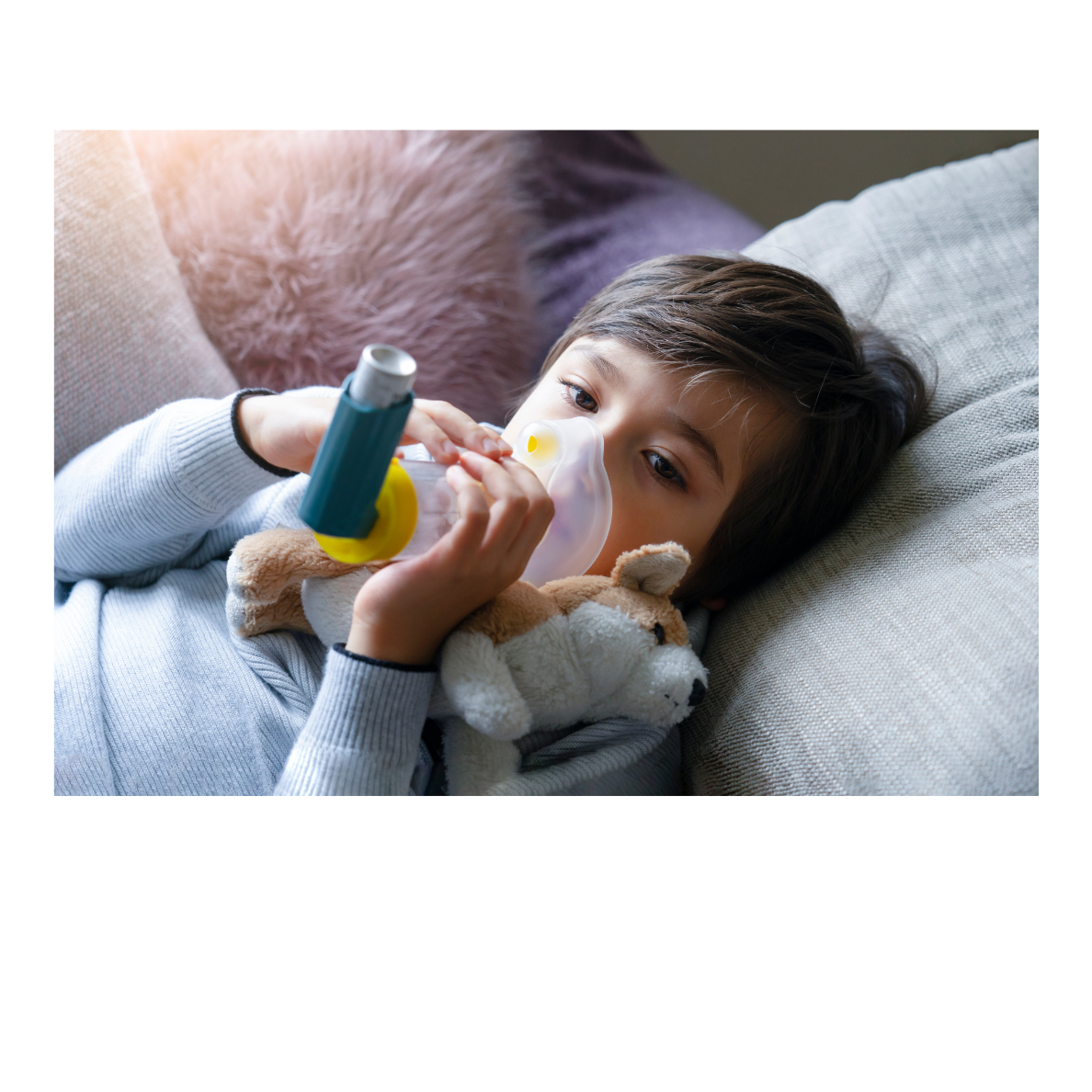
Child with Asthma using a masked spacer to take his medications.
Managing asthma and lung health can feel overwhelming — but you don’t have to do it alone. Join our Thrive community newsletter for practical tips, simple guides, and encouragement from a respiratory therapist who understands both professionally and personally. Be the first to know when our programs and courses become available.
